RON FREITAS
District Attorney
Office of the District Attorney
Protecting our community for 175 Years
Protecting our community for 175 Years









Ronald J. Freitas is the 42nd District Attorney to lead San Joaquin County’s chief law enforcement agency. This administration maintains a zero-tolerance approach to prosecuting criminals, working with local, state, and federal partners to create a safe and secure San Joaquin County for everyone.
"The mission of the District Attorney's Office is to bring justice and closure to victims of crime."

“True public safety requires a collaboration
between law enforcement and the community.” - Betsy Hodges
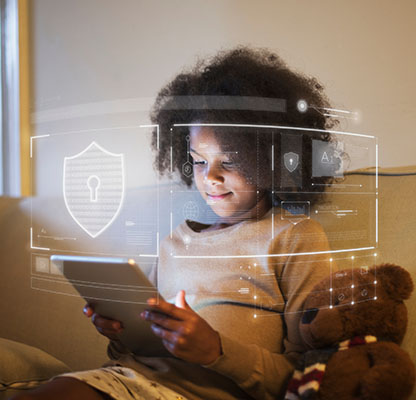
In today’s connected world, children’s digital footprints are expanding rapidly, and with that expansion come new responsibilities for parents and guardians. While it’s tempting to think of screen time
as harmless, especially when a game looks friendly and fun, the reality is more complex. Thumbs on keyboards may be tiny, but consequences can be large. Here are a few strategies for keeping kids safe online. We will also drill down into two of the
most popular online environments for children under 13, Roblox and Minecraft, so you can be proactive rather than reactive.
Kids today aren’t just watching videos or playing offline; they’re entering social-digital worlds where chat, user-generated content, in-game purchasing, and even hidden risks co-exist. For younger children in particular, several fronts warrant attention:
In short, helping kids use tech safely means not only locking doors, but also teaching them where the doors are, how to pick locks, and when not to open them.
Here are some best practices that apply across apps, games, and devices:
1. Secure the device
2. Use built-in controls and monitor spending
3. Co-navigate rather than just supervising
4. Teach digital “good citizenship” early
Even when a game is rated for young players, the multiplayer online element introduces additional hazards. Let’s break down two of the most-played platforms for kids under 13:
Roblox is a user-generated gaming platform where millions of players (including many under 13) join shared “experiences,” chat, play, build games, and socialize. While it offers creative opportunities, the open nature means there are lessons for parents.
Key risk areas:
Protective steps:
While the core game of Minecraft is often single-player and family-friendly, many children play on public servers or via voice chat, which introduces risks similar to fully social platforms.
Key risk areas:
Protective steps:
Online play can be tremendously positive; creativity, collaboration, spatial thinking, and peer socialization are real benefits. The goal isn’t to ban young children from digital worlds, but to make those worlds safer, better monitored, and richer with guidance. Think of your role as a navigator rather than a guard: you’re helping your child steer their online journey and equipping them with tools, both technical and personal, to thrive in it.
By combining solid device protections, game-specific supervision, open communication, and age-appropriate conversations, you’re setting your child up not just to be safer today, but to develop healthy digital habits that will serve them long into adolescence and adulthood.


A Family Justice Center is a collaborative model of service delivery that brings together a range of resources and support services under one roof to better serve victims of Domestic Violence, Human Trafficking, Sexual Assault, Elder Abuse, Child Abuse, and Stalking.
The goal of a Family Justice Center is to provide comprehensive and coordinated support to individuals and families affected by abuse, helping them to feel safe and supported as they navigate the process of seeking help and rebuilding their lives.
Visit the Family Justice Center